 Shared / family fit
Buying guide
Best Compound Bows for Beginners & Budget Buyers (2026)
For beginners and budget buyers: start with a reviewed ready-to-hunt or adjustable package that matches your use case, confirm draw range and handedness on the listing, then read the matching review before you buy.
We compare manufacturer specs, owner feedback, and real-world usability — then rank by value for your use case.
$0
paid placements.Commissions do not buy rankings.
Specs
from maker and retailerlistings, labeled as such.
Owners
recurring praise and complaintsweigh into the verdict.
Open
method page.How we research →
Jump to
I'm looking for…
Bow Advice participates in the Amazon Associates program and other affiliate programs. We may earn from qualifying purchases at no extra cost to you. This does not affect our reviews or editorial decisions. Learn more.
Model shortlist
Reviewed packages in this guide
Shared / family fit
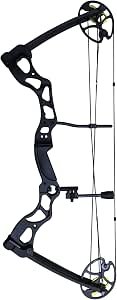 Budget package
SAS Outrage Review: 70 lb Hunting Compound Bow Package
Best for: Shoppers who want a full package on a tight budget
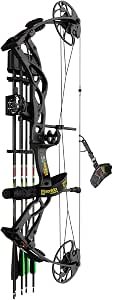 Wide adjustability
Sanlida Dragon X9 Ready to Hunt Package Review:
Best for: Growing or shared adult setups (right-hand)
 Beginner hunting package
Diamond Archery Edge XT Review: Beginner Hunting Bow
Best for: New hunters who want an adjustable package
At a glance
Side-by-side comparison
Bow
Price
Score
Weight
IBO
Draw wt
Draw len
ATA
Brace
Best for
Stock
Bear Archery Cruzer G2 Shared / family fit
Shared / family fit
SAS Outrage Review: 70 lb Hunting Compound Bow Package
Budget package
Sanlida Dragon X9 Ready to Hunt Package Review:
Wide adjustability
Diamond Archery Edge XT Review: Beginner Hunting Bow
Beginner hunting package
Bear Legit MAXX Review: Ready-to-Hunt Bow Package
Ready-to-hunt package

BARNETT Vortex Lite Youth Compound Bow
Youth starter
Our standards
Why trust BowAdvice?
Research-first
We start with manufacturer specs, owner manuals, and published adjustability ranges — not marketing slogans.
Use-case fit
Scores answer who the product is for and who should skip it. We do not invent chronograph or range hours.
Owner feedback
We weigh recurring owner complaints and praise from retailers, forums, and long-term users when available.
Labeled specs
IBO speed, draw weight, draw length, and mass weight come from published listings unless a review explicitly records a measured value.
Transparent scoring
We match products to the stated use case. Brands cannot pay for placement. Method: /how-we-test/.
This guide is for you if…
- You are a beginner or budget buyer choosing a first compound package
- You want model-level options we already reviewed, not brand prestige lists
- You will confirm draw range and handedness on the current listing
Skip this guide if…
- You want a paid #1 overall ranking of flagship brands we have not reviewed as models here
- You need left-hand options only (several packages on this page are right-hand)
- You expect invented lab tests, ownership stories, or guaranteed street prices
Need help deciding?
Find your bow in 30 seconds
Answer a few questions and we'll point you at the best pick in this guide.
What will you use the bow for most?
Do you need wide draw-length adjustability?
Is budget your top priority?
Do you want a ready-to-shoot package?
Our recommendation
Full rankings
Every pick, ranked
Shared / family fit
Pick 01
Shared / family fit: Bear Archery Cruzer G2
Bear Archery Cruzer G2 is the shared / family fit compound bow because a widely adjustable ready-to-hunt compound (listed draw weight/length range). One bow covers kids through adults with a 5–70 lb range and 12–30" draw length. No bow press needed.
A widely adjustable ready-to-hunt compound (listed draw weight/length range). One bow covers kids through adults with a 5–70 lb range and 12–30" draw length. No bow press needed.
Pros
- VERSATILE: Maximum-versatility bow is engineered for all ages and skill levels
- READY TO HUNT: Ready to hunt bow comes equipped with six Trophy Ridge accessories
- ADJUSTABLE: Adjustable from 12" to 30" draw length range and from 5 to 70 lbs. peak draw weight
- EASY ADJUSTMENTS: All adjustments are made using an Allen wrench with no need for a bow press
- LIGHTWEIGHT POWER: Weighs only 3 lbs. and fires arrows at 315 feet per second
Cons
- Factory strings may stretch during the first 100 shots
- Grip can feel small for larger hands
- Ready-to-Hunt package is right-hand only
- Not the fastest or quietest compound in its peer set (owner themes / listed claims)
Who should buy it
- You need one bow for multiple shooters (kids, teens, adults)
- You want a ready-to-hunt package with sight, rest, quiver, and stabilizer included
- You are a beginner who may increase draw weight over the next 1–2 years
- You want tool-free adjustments without visiting a pro shop
Who should skip it
- You are an experienced hunter who wants a flagship-speed bow (330+ fps)
- You shoot left-handed. This package is right-hand only
- You want the quietest possible setup for close-range hunting
- You already own a quality sight and rest and do not need the bundle
Key specs
- Weight
- —
- IBO speed
- —
- Draw weight
- —
- Draw length
- —
- Axle-to-axle
- —
- Brace height
- —
Why we picked it
A widely adjustable ready-to-hunt compound (listed draw weight/length range). One bow covers kids through adults with a 5–70 lb range and 12–30" draw length. No bow press needed.
Bottom line
A widely adjustable ready-to-hunt compound (listed draw weight/length range). One bow covers kids through adults with a 5–70 lb range and 12–30" draw length. No bow press needed.
Shared / family fit vs Wide adjustability
Shared / family fit
Bear Archery Cruzer G2
A widely adjustable ready-to-hunt compound (listed draw weight/length range). One bow covers kids through adults with a 5–70 lb range and 12–30"…
Best for: Families and first-time compound buyers
Shop Now Full pick →
Wide adjustability
Sanlida Dragon X9 Ready to Hunt Package Review:
For shared family setups where draw length and weight need to move with the shooter. A shared adult/teen RTH package needs wide…
Best for: Growing or shared adult setups (right-hand)
Shop Now Full pick →
Budget package
Pick 02
Budget package: SAS Outrage Review: 70 lb Hunting Compound Bow Package
SAS Outrage Review: 70 lb Hunting Compound Bow Package is the budget package compound bow because the **Southland Archery Supply Outrage 70 Lbs Hunting Compound Bow Package** is a real budget hunting bow package, not a premium out-of-box rig. If you want the cheapest…
The **Southland Archery Supply Outrage 70 Lbs Hunting Compound Bow Package** is a real budget hunting bow package, not a premium out-of-box rig. If you want the cheapest path into a compound bow and you’re okay with tuning help, it makes sense.
Pros
- The package price usually beats piecing together a bow package, release aid, arrow rest, peep sight, and quiver one item at a time.
- It gets you closer to a hunting-ready setup faster, which matters if you’re trying to be ready before season.
- The adjustable nature gives budget hunters a shot at a usable fit without jumping straight to a premium rig.
- It’s a practical entry point if you want to learn on a value compound bow before spending more.
- The included accessories may save money up front, but they don’t always feel like long-term gear.
Cons
- Buyers who need a different platform or budget tier
Who should buy it
Pros
- The package price usually beats piecing together a bow package, release aid, arrow rest, peep sight, and quiver one item at a time.
- It gets you closer to a hunting-ready setup faster, which matters if you’re trying to be ready before season.
- The adjustable nature gives budget hunters a shot at a usable fit without jumping straight to a premium rig.
- It’s a practical entry point if you want to learn on a value compound bow before spending more.
Cons
- The included accessories may save money up front, but they don’t always feel like long-term gear.
- Setup work matters here, and that can frustrate buyers who expect a polished first draw.
- A 70 lb label sounds impressive, but that doesn’t mean the bow is easy to shoot well.
- If you want a bow that’s quiet, refined, and simple to tune, a better-known midrange hunting bow usually feels better.
Next, check what the package usually includes and what you may still need to buy.
Who should skip it
- Buyers who need a different platform or budget tier
Key specs
- Weight
- —
- IBO speed
- —
- Draw weight
- —
- Draw length
- —
- Axle-to-axle
- —
- Brace height
- —
Why we picked it
The **Southland Archery Supply Outrage 70 Lbs Hunting Compound Bow Package** is a real budget hunting bow package, not a premium out-of-box rig. If you want the cheapest path into a compound bow and you’re okay with tuning help, it makes sense.
Bottom line
The **Southland Archery Supply Outrage 70 Lbs Hunting Compound Bow Package** is a real budget hunting bow package, not a premium out-of-box rig. If you want the cheapest path into a compound bow and you’re okay with tuning help, it makes sense.
Wide adjustability
Pick 03
Wide adjustability: Sanlida Dragon X9 Ready to Hunt Package Review:
Sanlida Dragon X9 Ready to Hunt Package Review: is the wide adjustability compound bow because for shared family setups where draw length and weight need to move with the shooter. A shared adult/teen RTH package needs wide draw adjustability without a bow press.
For shared family setups where draw length and weight need to move with the shooter. A shared adult/teen RTH package needs wide draw adjustability without a bow press.
Pros
- Huge adjustment range. The 0-70 lb, 18-31 inch window grows with a new archer or gets shared across the family.
- No bow press needed. Weight and length changes happen at the kitchen table with an Allen wrench.
- Complete one-box kit. Sight, rest, stabilizer, quiver, peep, D-loop, and carbon arrows ship together.
- 80% let-off. Owner themes and maker let-off claims point to an easier hold at full draw for many hunters.
- Limited lifetime warranty. Rare in this price tier from Sanlida Archery.
Cons
- Right-hand only. Lefties are out, full stop.
- Starter accessories. Bundled sight, rest, and arrows are entry tier. Most hunters upgrade before a serious season.
- Spec-sheet speed. The up-to-320 fps IBO number drops once you load a real hunting arrow and broadhead.
- Noisy stock string. Add silencers or dampeners for tree-stand work.
- Still needs setup. "Ready to hunt" means peep alignment, sight leveling, and rest timing before the opener.
Who should buy it
- Huge adjustment range. The 0-70 lb, 18-31 inch window grows with a new archer or gets shared across the family.
- No bow press needed. Weight and length changes happen at the kitchen table with an Allen wrench.
- Complete one-box kit. Sight, rest, stabilizer, quiver, peep, D-loop, and carbon arrows ship together.
- 80% let-off. Owner themes and maker let-off claims point to an easier hold at full draw for many hunters.
- Limited lifetime warranty. Rare in this price tier from Sanlida Archery.
- Adult-fit geometry. Near 30 inch axle-to-axle, it handles like a real bow, not a toy.
Who should skip it
- Right-hand only. Lefties are out, full stop.
- Starter accessories. Bundled sight, rest, and arrows are entry tier. Most hunters upgrade before a serious season.
- Spec-sheet speed. The up-to-320 fps IBO number drops once you load a real hunting arrow and broadhead.
- Noisy stock string. Add silencers or dampeners for tree-stand work.
- Still needs setup. "Ready to hunt" means peep alignment, sight leveling, and rest timing before the opener.
Key specs
- Weight
- —
- IBO speed
- —
- Draw weight
- 0–70 lbs
- Draw length
- —
- Axle-to-axle
- —
- Brace height
- —
Why we picked it
For shared family setups where draw length and weight need to move with the shooter. A shared adult/teen RTH package needs wide draw adjustability without a bow press.
Bottom line
For shared family setups where draw length and weight need to move with the shooter. A shared adult/teen RTH package needs wide draw adjustability without a bow press.
Beginner hunting package
Pick 04
Beginner hunting package: Diamond Archery Edge XT Review: Beginner Hunting Bow
Diamond Archery Edge XT Review: Beginner Hunting Bow is the beginner hunting package compound bow because the Diamond Edge XT is a strong buy for a first hunting bow, especially if you want one rig that can start easy and stay relevant as your…
The Diamond Edge XT is a strong buy for a first hunting bow, especially if you want one rig that can start easy and stay relevant as your form improves. It’s the kind of bow I’d point a new hunter toward if they want a ready-to-shoot package and don’t want to rebuild the whole setup next season.
Pros
- The draw weight and draw length range make it easy to start low and grow into the bow.
- The package value is real, especially for a first buyer who doesn’t want to piece together every part.
- It holds steady enough for new shooters who still fight anchor and follow-through.
- The brace height gives it a forgiving feel, which helps when your form isn’t perfect yet.
- The axle-to-axle length feels stable without turning the bow into a boat paddle in the woods.
Cons
- The included accessories are serviceable, not fancy, so don’t expect premium parts in every slot.
- It still needs proper tuning, even if it’s sold as a ready-to-shoot package.
- At higher settings, it can feel like more bow than a brand-new shooter should start with.
- Noise and vibration are acceptable, but lighter or pricier bows can feel cleaner on the shot.
- The quiver, peep sight, and arrow rest may get you shooting, but they’re not the last word in refinement.
Who should buy it
- The draw weight and draw length range make it easy to start low and grow into the bow.
- The package value is real, especially for a first buyer who doesn’t want to piece together every part.
- It holds steady enough for new shooters who still fight anchor and follow-through.
- The brace height gives it a forgiving feel, which helps when your form isn’t perfect yet.
- The axle-to-axle length feels stable without turning the bow into a boat paddle in the woods.
- Vibration dampening is good enough for a budget hunting bow, and that matters on a whitetail setup.
What stood out in actual use was how little drama it asked for. I like a bow that doesn’t punish a shaky release, and this one stays friendly while you’re learning.
Who should skip it
- The included accessories are serviceable, not fancy, so don’t expect premium parts in every slot.
- It still needs proper tuning, even if it’s sold as a ready-to-shoot package.
- At higher settings, it can feel like more bow than a brand-new shooter should start with.
- Noise and vibration are acceptable, but lighter or pricier bows can feel cleaner on the shot.
- The quiver, peep sight, and arrow rest may get you shooting, but they’re not the last word in refinement.
- You’ll still need to match arrows and broadheads carefully if you plan to hunt.
A first-time buyer can open the box and think the work is done. Then the release aid, arrows, and hunting heads show up on the second receipt, and the budget gets real fast.
Key specs
- Weight
- —
- IBO speed
- —
- Draw weight
- —
- Draw length
- —
- Axle-to-axle
- —
- Brace height
- —
Why we picked it
The Diamond Edge XT is a strong buy for a first hunting bow, especially if you want one rig that can start easy and stay relevant as your form improves. It’s the kind of bow I’d point a new hunter toward if they want a ready-to-shoot package and don’t want to rebuild the whole setup next season.
Bottom line
The Diamond Edge XT is a strong buy for a first hunting bow, especially if you want one rig that can start easy and stay relevant as your form improves. It’s the kind of bow I’d point a new hunter toward if they want a ready-to-shoot package and don’t want to rebuild the whole setup next season.
Ready-to-hunt package
Pick 05
Ready-to-hunt package: Bear Legit MAXX Review: Ready-to-Hunt Bow Package
Bear Legit MAXX Review: Ready-to-Hunt Bow Package is the ready-to-hunt package compound bow because ## Introduction
## Introduction
Pros
- Wide draw weight adjustment helps the bow fit more shooters across learning and hunting stages.
- IMS Rest support makes arrow rest swaps less annoying and keeps tuning plans cleaner.
- Picatinny sight mounts improve accessory compatibility and simplify sight upgrades.
- Ready to hunt packaging cuts down on first-build friction versus buying a bare bow.
- Strong grow-with-you platform for beginners who expect to improve over seasons.
Cons
- Package accessories may be usable, not final-grade compared with flagship sight and rest setups.
- Final tuning still matters before you trust the bow on a hunt.
- Draw length fit is just as important as poundage for comfort and accuracy.
- Better bundles exist if you want more premium parts out of the box.
- Arrows, release, and broadheads usually sell separately even on RTH listings.
Who should buy it
The biggest win is the draw weight range. A 10 to 70 lb window gives beginners room to learn and growing archers room to increase poundage.
The mounting setup is the other standout. IMS Rest and Picatinny sight mounts make future accessory changes easier.
- Wide draw weight adjustment helps the bow fit more shooters across learning and hunting stages.
- IMS Rest support makes arrow rest swaps less annoying and keeps tuning plans cleaner.
- Picatinny sight mounts improve accessory compatibility and simplify sight upgrades.
- Ready to hunt packaging cuts down on first-build friction versus buying a bare bow.
- Strong grow-with-you platform for beginners who expect to improve over seasons.
I like this more as a platform than as a one-and-done bundle. A seasoned hunter can buy it once, then refine it over time instead of replacing the whole setup.
Who should skip it
Ready to hunt doesn't always mean fully optimized. Some included accessories are starter-grade.
Fit still depends on draw length, not just draw weight. A bad length setting feels awkward no matter the poundage window.
You may still want tuning, better accessories, or a different sight before season.
- Package accessories may be usable, not final-grade compared with flagship sight and rest setups.
- Final tuning still matters before you trust the bow on a hunt.
- Draw length fit is just as important as poundage for comfort and accuracy.
- Better bundles exist if you want more premium parts out of the box.
- Arrows, release, and broadheads usually sell separately even on RTH listings.
I've seen buyers get burned by assuming every ready to hunt package is finished. The smarter move is to treat it as a strong starting point, not a finished custom build.
Key specs
- Weight
- —
- IBO speed
- —
- Draw weight
- —
- Draw length
- —
- Axle-to-axle
- —
- Brace height
- —
Why we picked it
## Introduction
Bottom line
## Introduction
Youth starter
Pick 06
Youth starter: BARNETT Vortex Lite Youth Compound Bow
BARNETT Vortex Lite Youth Compound Bow is the youth starter compound bow because youth compound; retail title on our review lists 18–29 lb draw weight.
Youth compound; retail title on our review lists 18–29 lb draw weight.
Pros
- BARNETT VORTEX LITE COMPOUND BOW FOR YOUTH AND TEENS: Versatile and well-equipped compound vertical bow designed to adjust with the advancing skills of developing archers. Bow comes ready to shoot in a package with two arrows and an attached quiver
- BEGINNER FRIENDLY: The bow allows for modular adjustments to the draw weight and draw length, depending on the archer's stature and strength. Draw length adjusts in 1" increments and the draw weight adjusts 18-29 lbs
- HIGH QUALITY: Vortex compound bow is constructed to ATA/AMO standards, and is in the color Mossy Oak Break Up Country which allows the bow to easily camouflage
- READY TO SHOOT: The right-handed compound bow comes in a package with a 3-Pin fiberoptic sight, an oversized dual cam system, adjustable arrow rest, synthetic string and cable system, two 28" aluminum arrows, and an attached quiver
- BARNETT: The most trusted name in crossbows since 1962
Key specs
- Weight
- —
- IBO speed
- —
- Draw weight
- —
- Draw length
- —
- Axle-to-axle
- —
- Brace height
- —
Why we picked it
Youth compound; retail title on our review lists 18–29 lb draw weight.
Bottom line
Youth compound; retail title on our review lists 18–29 lb draw weight.
Buying guide
How to choose the right bow
Who this page is for: beginners and budget buyers choosing a first compound package. It is not a “best of all brands” ranking, and it does not invent field tests, ownership stories, or prices.
What you will get: model-level options we already reviewed, compared on use case, draw range (when listed in our review metadata), package type, and fit caveats — then a restrained next step.
How to use this guide
- Use case — shared family bow, adult beginner package, youth starter, or first hunting package.
- Draw range — only ranges that already appear in our review metadata or the retail title we cite on that review.
- Package contents — ready-to-hunt kit vs bow-focused setup; accessories on budget kits are usually starter-grade.
- Fit caveat — handedness, youth vs adult, and who should skip (from each review).
- Next step — open the matching review, then confirm draw weight, draw length, and handedness on the current retailer listing before you buy.
Comparison criteria (beginner / budget)
- Use case first — youth, shared family, adult beginner, or first hunting package. Do not buy on brand prestige alone.
- Draw range — you must be able to draw and hold safely. If you are unsure, read the draw weight guide before you shop.
- Package vs bare bow — ready-to-hunt kits cost less up front; sights/rests on budget kits are usually starter-grade.
- Fit caveats — handedness and who should skip matter more than any badge on this page.
- What we will not claim — we do not invent chronograph readings, hunting stories, ownership, prices, or “#1 overall” rankings on this hub.
What to do next
1) Pick the model whose use case matches you. 2) Read that review’s buy/skip notes. 3) On the retailer listing, confirm draw weight, draw length, handedness, and what is in the box today. 4) If compound vs recurve is still open, see compound vs recurve. Method notes: how we research.
Common questions
Frequently asked questions
Yes — if it fits you and you can tune it reliably. Most bows in this price range hit legal hunting draw weights. The bigger question is fit, quiet tuning, and whether the package accessories are good enough to get you shooting accurately before season.
Used can save money, but beginners often pay in tuning time and unknown wear. A new budget bow with wide adjustability is usually the safer first buy because you can grow into it and know the string/cable history.
Start lower than you think — often 40–50 lbs for adults learning form. You can increase draw weight as your shot process improves. Adjustability matters more than peak weight for your first compound.
A well-maintained compound bow often lasts 10–20 years. Strings and cables need replacement every 2–3 years of regular use. Budget bows can last just as long as premium models if you keep up with maintenance.
Several picks in this guide advertise no-press maintenance for basic setup. You still need proper tuning knowledge or a shop for major work — but beginner-friendly designs reduce early frustration.
Start here: Bear Archery Cruzer G2
A widely adjustable ready-to-hunt compound (listed draw weight/length range). One bow covers kids through adults with a 5–70 lb range and 12–30" draw length. No bow press needed.