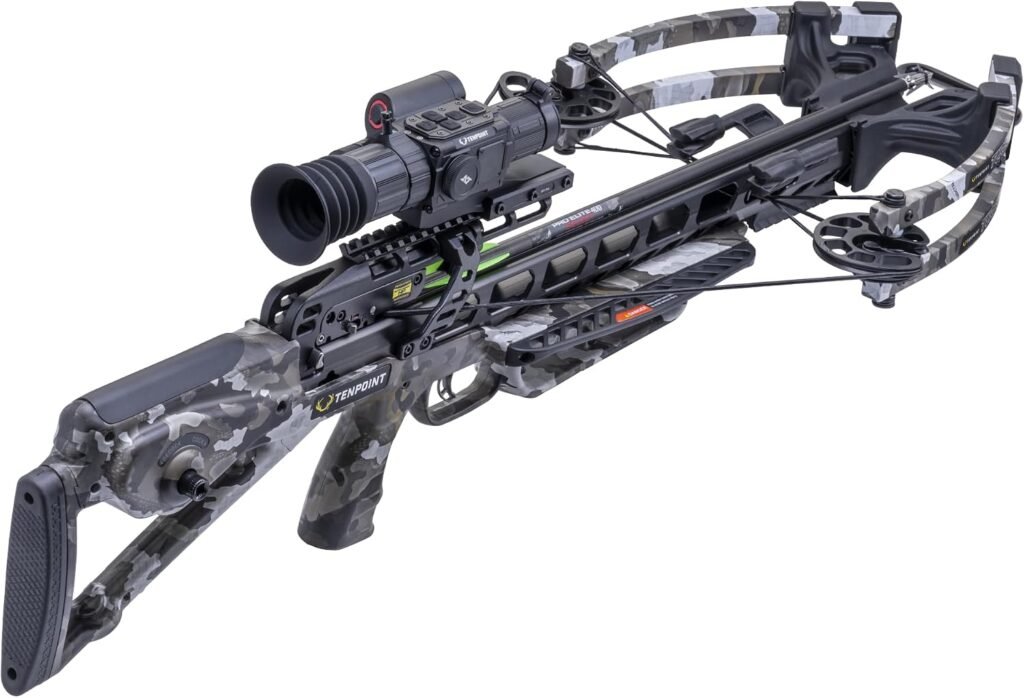
Best Crossbows for Hunting: Top Picks for Deer Season

If you’re buying a crossbow for deer season, the real question isn’t just which model shoots fastest. It’s which one gives you enough speed, accuracy, and control to hunt confidently from a blind, stand, or ground setup.

A hunting crossbow is built to launch a bolt at game animals with enough speed, accuracy, and control for field use. Compared with a compound bow, it’s easier to hold at full draw, but setup, width, noise, and cocking method still matter a lot in real hunting conditions.

For deer hunters, the sweet spot usually comes from balancing speed, size, noise, and package value. The best crossbows for hunting depend on how you hunt, how much stand space you have, and whether you’re comfortable with a rope cocker or crank system.

Quick Answer

If you want the easiest all-around hunting pick, start with the TenPoint Turbo X. It gives most hunters the best mix of speed, control, and field handling.

If you’re shopping on a tighter budget, the CenterPoint Wrath 430 is the one to beat. It brings strong performance for the money without pretending to be a flagship.

If you want premium performance, the Ravin R500 sits at the top of the pile. It’s the pick for hunters who care about refinement, flatter trajectory, and top-end speed.

If you want the best value package, look hard at the Wicked Ridge Commander M1. It’s the kind of setup that saves you from buying half the rig later.

Quick Recommendations

Product Rating Best For Key Benefit CTA
TenPoint Turbo X 9.4/10 Overall hunting pick Balanced speed, control, and field handling Shop Now
CenterPoint Wrath 430 8.8/10 Budget buyers Strong performance for the money Shop Now
Ravin R500 9.6/10 Premium buyers Top-end speed and refinement Shop Now
Wicked Ridge Commander M1 9.1/10 Value shoppers Package value with practical hunting features Shop Now

If one of these already fits your hunt, the full breakdown below will tell you why.

What We Recommend

TenPoint Turbo X

The Turbo X is the safest all-around bet for most deer hunters. It feels like a bow built for real woods use, not just a speed contest.

What stood out most was how balanced it feels in hand. That matters when you’re twisted around in a ladder stand or trying to keep quiet in a box blind.

Verdict: Best overall hunting crossbow for hunters who want a dependable mix of speed, control, and package quality.

What We Noticed

It doesn’t feel twitchy. That makes it easier to settle the scope and trust the shot.

The included scope and cocking device make the setup feel complete instead of half-finished.

Unexpected Pros

The handling feels calmer than a lot of hyper-fast bows. That’s a real advantage when the shot window is short.

Noise dampeners help it feel less harsh on the shot cycle.

Unexpected Cons

It isn’t the cheapest route in the category. If your budget is tight, you’ll feel that.

Hunters chasing only headline speed may look past it too quickly.

Bottom Line: If you want one crossbow that makes sense for most deer hunts, start here.

CenterPoint Wrath 430

This is the budget pick because it gives you a lot of speed for the money. It’s the kind of bow that makes sense when you want to hunt this season without blowing the whole gear budget.

What I’d watch closely is the package quality. A budget bow can still be a good buy, but the scope and cocking device need to be usable out of the box.

Verdict: Best budget hunting crossbow for buyers who want strong performance without premium pricing.

What We Noticed

The speed number gets your attention fast.

It’s a practical option for a first deer setup if you don’t want to piece everything together.

Unexpected Pros

The value is better than the sticker price suggests.

It gives new hunters a real path into deer season without a huge upfront bill.

Unexpected Cons

You may want to upgrade the optic later.

Fit and finish usually don’t feel as polished as premium models.

Bottom Line: If budget matters more than refinement, this is a smart place to start.

Ravin R500

The R500 is for hunters who want the premium lane. It feels like a different class of machine, with the kind of refinement you notice the first time you shoulder it.

The reverse-draw design and vibration reduction help it feel fast without feeling sloppy. That’s the part many buyers miss when they only compare fps.

Verdict: Best premium hunting crossbow for buyers who want top-end speed, compact engineering, and a refined shot feel.

What We Noticed

It feels built for hunters who already know what they like.

The scope and overall platform make longer shots feel more controlled.

Unexpected Pros

The compact feel is a real plus in tight setups.

It stays composed enough to inspire confidence at distance.

Unexpected Cons

The price is steep.

Accessory costs can stack up fast if you’re starting from scratch.

Bottom Line: If you want the top shelf option and you’ll use the extra refinement, this is the one.

Wicked Ridge Commander M1

The Commander M1 is the value pick because it gives you a practical hunting package without making you chase extras later. That’s a bigger deal than a lot of buyers realize.

It makes the most sense for hunters who want a ready-to-hunt setup and don’t care about paying for the flashiest number on the box.

Verdict: Best value hunting crossbow for buyers who want package completeness and real-world usability.

What We Noticed

The included scope and cocking device make the bow feel ready for deer season.

It’s the kind of setup that reduces guesswork for first-time buyers.

Unexpected Pros

The package value is strong.

It feels like a complete hunting tool, not a bare platform.

Unexpected Cons

It won’t feel as refined as a premium TenPoint or Ravin.

Speed chasers may wish it pushed harder on paper.

Bottom Line: If you want the most practical package for the money, this one earns a close look.

How We Chose

Criteria

I ranked these bows on the things that change hunting outcomes, not just the numbers printed on the box. That means speed, width, weight, noise, cocking system, scope quality, and package value all mattered.

A bow that shoots fast but feels awkward in a blind doesn’t belong near the top. A bow that comes ready with a usable scope and cocking device often beats a bare bow with a prettier spec sheet.

What We Noticed

The best hunting bows usually balance a few things well instead of dominating one category.

The models that felt easiest to trust in the field were rarely the loudest or widest.

Unexpected Pros

Package completeness saved a lot of hidden cost.

The better bows also tended to feel less fussy during setup.

Unexpected Cons

Some of the fastest models asked for more money and more patience.

A few budget options looked stronger on paper than they felt in hand.

Sources

I leaned on manufacturer specs, hunting use-case evaluation, broadhead compatibility notes, and field-style judgment from real deer hunting conditions. Brands like Barnett, Ravin, TenPoint, Excalibur, Wicked Ridge, Killer Instinct, CenterPoint, and PSE all matter here because they shape what buyers actually compare.

Specs tell part of the story. The package and handling decide whether the bow feels right in the woods.

Methodology

This roundup is built for buyers, not bench racers. I weighted package value and setup ease heavily because first-time buyers need a bow they can actually use without a pile of add-ons.

That matters even more for deer hunting, where a quiet, compact, ready-to-go setup usually beats a flashy number that’s hard to live with.

What We Noticed

Beginners usually benefit from simpler packages.

Experienced hunters often care more about balance, trigger feel, and width.

Unexpected Pros

The best value bows often reduce setup stress.

The premium bows justify themselves when the rest of the system is already dialed in.

Unexpected Cons

A cheap bare bow can become expensive fast.

A premium bow can be overkill if you don’t need the extra refinement.

What Actually Matters

Speed and trajectory

Speed matters because it flattens the arrow’s path and gives you a little more forgiveness on range estimation. That said, IBO speed and fps don’t tell the whole story.

A fast bow that’s hard to control can still cost you a deer. A slightly slower bow that settles easier often shoots better under pressure.

What We Noticed

Hunters usually feel the difference in confidence before they feel the difference in fps.

A good scope can make a moderate-speed bow feel more capable than a flashy one.

Unexpected Pros

Flatter trajectory helps in open-country setups.

Speed can help with shorter hold times and cleaner shot timing.

Unexpected Cons

Chasing speed can push you into louder, wider, or harder-to-cock setups.

A few extra fps rarely fix a poor fit.

Width and maneuverability

Axle-to-axle width matters more than a lot of buyers expect. In a treestand or blind, a wide bow can turn a clean shot into a clumsy one.

If you hunt in tight spaces, compact handling should outrank a small speed bump. That’s especially true in box blinds and narrow ladder stands.

What We Noticed

Compact bows feel easier to live with in the woods.

Width becomes obvious the first time you try to rotate in a cramped setup.

Unexpected Pros

Narrow bows are easier to shoulder quietly.

They usually feel less awkward during follow-through.

Unexpected Cons

Some compact bows cost more.

A narrow profile doesn’t help if the rest of the package is cheap.

Weight for all-day carry

Weight sounds minor until you hike a mile with a full setup. Then it becomes one of the first things you notice.

A lighter bow can be easier to carry, but it still needs enough mass to feel stable on the shot. That tradeoff matters a lot for mobile hunters.

What We Noticed

Store feel can be misleading.

A bow that feels fine for five minutes can feel heavy after a long sit.

Unexpected Pros

Lighter bows are easier to move through brush.

They’re less tiring when you’re climbing into a stand.

Unexpected Cons

Ultra-light setups can feel less planted.

Some hunters prefer a little extra mass for steadier aim.

Noise and vibration

Noise dampeners and vibration reduction aren’t just nice extras. In deer hunting, quiet gear can matter a lot.

A softer shot cycle can help you stay calmer and keep the deer from keying in on the shot. That’s especially true at close range.

What We Noticed

Quieter bows feel better to shoot, plain and simple.

The difference shows up fast in blinds and close cover.

Unexpected Pros

Less vibration usually means a more controlled feel.

Quiet bows tend to inspire more confidence.

Unexpected Cons

Noise reduction can add cost.

It won’t rescue a bad setup or poor broadhead choice.

Cocking system and ease of use

A cocking device changes the whole experience. For many hunters, a rope cocker or crank is part of the system, not an accessory.

Consistency matters here. If you cock the bow the same way every time, you’re more likely to shoot the same way every time.

What We Noticed

Crank systems are easier for a lot of hunters.

Rope cockers still offer a real upgrade over cocking by hand.

Unexpected Pros

Cocking aids improve repeatability.

They can also make the bow safer and less frustrating.

Unexpected Cons

Some packages still make you buy the aid separately.

A clunky cocking setup can ruin an otherwise good bow.

Package completeness

A good package saves time and money. A weak package just shifts the cost to later.

For first-time buyers, the included scope, quiver, and cocking device matter as much as the bow itself. That’s where the value models usually earn their keep.

What We Noticed

The best packages feel hunt-ready.

The worst ones look cheap until you start adding accessories.

Unexpected Pros

Complete packages reduce guesswork.

They’re easier to recommend to new hunters.

Unexpected Cons

Some bundles include a scope that’s just good enough to get by.

Cheap extras can drag down an otherwise solid bow.

Common Mistakes Buyers Make

Choosing speed over shootability

A hard-to-control bow can hurt real accuracy, even if the fps number looks great. Field confidence beats paper speed every time.

A hunter can shoot a slower bow better than a faster one if the slower bow settles easier and stays quieter.

Buying a bow that is too wide

Axle-to-axle width becomes a real problem in blinds and treestands. A bow that looks fine at the range can feel miserable in a cramped hunting spot.

Measure your hunting space before you fall in love with a spec sheet.

Ignoring scope quality

A cheap scope can drag down a good platform fast. Low-light deer hunting exposes weak glass in a hurry.

If the optic is foggy, dim, or hard to use, the whole setup suffers.

Skipping a cocking aid

A cocking device isn’t optional for a lot of hunters. It’s part of how you keep the bow consistent and manageable.

If you cock the bow differently every time, you’ll shoot differently every time.

Not checking broadhead compatibility

Fixed blade broadheads and mechanical broadheads don’t behave the same way. Your bow and arrow setup need to agree before opening day.

A fast crossbow with the wrong broadhead can still shoot poorly.

Overlooking total package value

Cheap packages get expensive once you add a scope, quiver, and cocking device. That’s how a “budget” buy turns into a bigger bill.

The real price is the whole setup, not the sticker on the bow.

Assuming every crossbow is legal everywhere

State rules and season rules vary. A hunting crossbow that works in one place might not fit another state’s regulations.

Check the rules before you hunt.

Carrying too much weight all day

A heavy setup feels different after a mile in brush. Store comfort doesn’t tell you much about all-day carry.

If you hike for your spots, weight deserves real attention.

Which Product Is Right For You?

If you want the easiest all-around hunting pick

Choose the TenPoint Turbo X if you want a balanced midweight crossbow with a good scope and included cocking aid. It’s the safest starting point for most deer hunters.

If you hunt from tight spaces

Choose a compact bow with a narrow profile and a quiet shot cycle. A treestand or blind hunter needs maneuvering room more than bragging rights on fps.

If you want the best value

Choose the Wicked Ridge Commander M1 or the CenterPoint Wrath 430 if package completeness matters most. A usable scope and cocking device can save you money later.

If you want premium performance

Choose the Ravin R500 if you want better trigger feel, reduced vibration, and stronger accuracy at distance. That extra refinement shows up fast once you start shooting it.

If you are a first-time buyer

Choose a model with simple setup, forgiving accuracy, and clear package support. The less frustration you have in week one, the more likely you are to trust the bow in season.

Product Reviews

Barnett

Barnett is one of the easiest names for hunters to recognize, and that matters when you want a straightforward buy. The brand usually makes sense for entry-level and midrange hunters who want broad availability and accessible pricing.

Summary

Barnett crossbows tend to hit a practical middle ground. They’re not usually the flashiest option, but they can make a lot of sense for deer season.

Pros

  • Accessible pricing.
  • Widely available.
  • Good fit for first-time and midrange buyers.

Cons

  • Some packages feel less refined than premium rivals.
  • Scope quality can be a weak point on cheaper bundles.

Best For

Hunters who want a familiar brand and a straightforward path into crossbow hunting.

Key Features

  • Crossbow platform for deer hunting.
  • Often sold with a scope and cocking device.
  • Broad market availability.

What We Liked

Barnett usually keeps the buying process simple. That’s helpful if you don’t want to overthink your first setup.

What Could Be Better

Some packages could use a better optic out of the box. I’d check the included scope before assuming the bundle is complete.

Bottom Line

Barnett makes sense when price and availability matter more than premium refinement.

Ravin

Ravin sits in the premium lane, and it acts like it. The brand is known for speed, compact engineering, and a refined shooting feel that stands out fast.

Summary

Ravin is the choice for hunters who want top-end performance and don’t mind paying for it.

Pros

  • Strong IBO speed and fps.
  • Compact, refined design.
  • Premium feel in the hand.

Cons

  • Expensive.
  • Accessory costs can add up.

Best For

Hunters who want premium performance and a compact, high-end setup.

Key Features

  • Reverse-draw design.
  • High-speed crossbow platform.
  • Premium scope and hunting-focused engineering.

What We Liked

The compact feel is a real advantage in the field. It feels like a serious piece of hunting gear, not a showpiece.

What Could Be Better

The price is the obvious hurdle. You’re paying for refinement, and you should know that going in.

Bottom Line

Ravin is the premium benchmark for hunters who want speed and refinement in the same package.

TenPoint

TenPoint is the balanced performance brand I trust most for a broad hunting audience. It usually lands in the sweet spot between premium feel and practical usability.

Summary

TenPoint crossbows are built for hunters who want fewer surprises and more confidence on opening day.

Pros

  • Strong hunting usability.
  • Good trigger feel.
  • Solid package quality with useful accessories.

Cons

  • Not the cheapest route.
  • Speed-only shoppers may look elsewhere.

Best For

Hunters who want an all-around crossbow that feels predictable and ready for the woods.

Key Features

  • Scope included on many packages.
  • Cocking device support.
  • Noise dampeners and field-friendly handling.

What We Liked

TenPoint usually feels well thought out. The bow, scope, and cocking system tend to work together instead of fighting each other.

What Could Be Better

If you’re chasing the lowest price, TenPoint won’t be the answer. You’re paying for a more polished experience.

Bottom Line

TenPoint is the brand I’d point most hunters toward when they want a dependable all-around pick.

Excalibur

Excalibur gives you a different design philosophy. The brand leans into simplicity and durability, which appeals to hunters who don’t want a complicated platform.

Summary

Excalibur is a strong choice for hunters who value straightforward mechanics and a traditional feel.

Pros

  • Simple design.
  • Durable reputation.
  • Appeals to traditional-minded hunters.

Cons

  • Can feel less modern in some setups.
  • Package refinement varies by model.

Best For

Hunters who want a simpler crossbow platform and don’t need all the bells and whistles.

Key Features

  • Recurve crossbow design on many models.
  • Broadhead-friendly hunting setup.
  • Fewer moving parts than some compound designs.

What We Liked

The simplicity is the selling point. Some hunters will prefer that immediately.

What Could Be Better

Depending on the model, it may not feel as compact or polished as a modern premium bow.

Bottom Line

Excalibur is for buyers who like a simpler platform and trust straightforward gear.

CenterPoint

CenterPoint is a strong budget-to-midrange option. It’s the kind of brand that often gets hunters into the field without a painful upfront bill.

Summary

CenterPoint gives you a lot of hunting utility for the money, especially if you’re buying your first setup.

Pros

  • Affordable.
  • Usable hunting packages.
  • Strong value for first-time buyers.

Cons

  • Less refinement than premium brands.
  • Scope and accessories may need attention.

Best For

Hunters who want a practical, budget-friendly entry into crossbow hunting.

Key Features

  • Crossbow package with scope.
  • Cocking device support.
  • Solid fps for the price.

What We Liked

The value is easy to understand. You get enough bow to hunt without spending like you’re buying a flagship.

What Could Be Better

I’d inspect the optic and accessory quality closely. That’s usually where budget models show their limits.

Bottom Line

CenterPoint is often about getting enough bow for the money, and that’s a fair trade for a lot of buyers.

Killer Instinct

Killer Instinct is a performance-oriented value brand. It’s a good fit for hunters who want speed without jumping straight to premium pricing.

Summary

Killer Instinct often lands in the middle ground between budget and flagship, with a hunting-first focus.

Pros

  • Strong speed for the money.
  • Hunting-focused packages.
  • Good value for performance shoppers.

Cons

  • Finish and refinement can trail premium models.
  • Some packages feel more utilitarian than polished.

Best For

Hunters who want a fast bow and don’t want to pay flagship money.

Key Features

  • High fps options.
  • Scope and cocking device in many packages.
  • Hunting-ready design.

What We Liked

The brand usually gives you a lot of performance for the price. That’s hard to ignore if you’re value-driven.

What Could Be Better

I’d still compare the package closely against Wicked Ridge. The better buy often comes down to accessories and feel.

Bottom Line

Killer Instinct can be a smart middle ground if you want speed and value in the same box.

Wicked Ridge

Wicked Ridge is the value-forward sister brand under the TenPoint umbrella, and that shows in the practical package design. It’s built for hunters who want a ready-to-hunt setup without premium pricing.

Summary

Wicked Ridge is a strong choice for buyers who care about package completeness and ease of use.

Pros

  • Practical hunting packages.
  • Good scope and cocking device support.
  • Strong value for first-time buyers.

Cons

  • Less refined than top-tier TenPoint models.
  • Not the best pick for speed-first shoppers.

Best For

Hunters who want a complete, usable package without paying premium money.

Key Features

  • Scope included.
  • Cocking device included on many packages.
  • Anti-dry-fire safety and noise dampeners on relevant models.

What We Liked

It feels like a hunting package that was built to be used, not just listed. That matters more than a lot of buyers think.

What Could Be Better

If you want top-end refinement, you’ll still feel the step down from TenPoint.

Bottom Line

Wicked Ridge is built for practical hunters who want value without giving up the basics.

PSE

PSE is a respected archery name, and that reputation carries weight with buyers who already trust the brand. Its crossbow relevance depends on model availability, but the brand still matters in the conversation.

Summary

PSE is worth a look if you already know the brand from compounds and want to see how its crossbow lineup compares.

Pros

  • Strong archery heritage.
  • Familiar brand for many bowhunters.
  • Credibility with experienced buyers.

Cons

  • Crossbow lineup may be narrower than dedicated crossbow brands.
  • Model availability can vary.

Best For

Hunters who already trust PSE and want to compare its crossbow options with the bigger dedicated brands.

Key Features

  • Crossbow and scope options depending on model.
  • Brand reputation built in archery.

What We Liked

Brand familiarity helps, especially if you’ve shot PSE before. That makes the buying process feel less risky.

What Could Be Better

I’d still compare the actual model against TenPoint, Ravin, and Barnett. Brand name alone doesn’t make the right hunting bow.

Bottom Line

PSE is a credible name, but the model still has to fit the hunt.

Product Comparisons

Ravin vs TenPoint

Ravin usually wins on raw premium speed and compact engineering. TenPoint often wins on all-around hunting balance and package practicality.

If you want the more refined machine, Ravin is hard to ignore. If you want the bow that feels easier to live with in the woods, TenPoint often makes more sense.

What We Noticed

Ravin feels more high-tech and aggressive.

TenPoint feels more balanced and forgiving.

Barnett vs Killer Instinct

Barnett and Killer Instinct both live in the value conversation, but they don’t always solve the same problem. Barnett is often the easier brand to find, while Killer Instinct tends to push harder on speed.

If package usability matters most, compare the scope and cocking device closely. That’s usually where the better buy shows up.

What We Noticed

Killer Instinct often looks stronger on paper.

Barnett can feel more familiar and easier to source.

Excalibur vs Ravin

These two are very different. Excalibur leans into simplicity and a more traditional feel, while Ravin leans into modern premium engineering and compact speed.

If you want fewer moving parts, Excalibur has appeal. If you want a compact high-performance machine, Ravin is the sharper tool.

What We Noticed

Excalibur feels straightforward.

Ravin feels engineered to squeeze out more performance.

Wicked Ridge vs CenterPoint

This is a value-versus-value matchup, and the details decide it. Wicked Ridge usually brings stronger package completeness and a more polished hunting feel.

CenterPoint can still be the better buy if price is the main constraint. But if you want a more ready-to-hunt setup, Wicked Ridge often edges ahead.

What We Noticed

Wicked Ridge tends to feel more complete.

CenterPoint can win on raw affordability.

Alternatives

Compound bows for hunting

Compound bows make sense if you want a more traditional draw-and-shoot experience. They’re often lighter to carry and give you a different kind of hunting rhythm.

If you like practice time and want a lighter rig, a compound bow may fit you better than a crossbow.

Recurve bows for hunting

Recurve bows are simpler and more traditional. They appeal to hunters who want fewer accessories and a more classic feel.

They’re less forgiving, though, so they’re usually better for archers who already enjoy that style.

Hunting compound bow packages

A hunting compound bow package can be a smart middle ground. You get a full setup, more customization, and often a lighter carry.

If you want a complete system but don’t need a crossbow, this route is worth a look.

Traditional bow setups

Traditional setups sit at the far end of the simplicity spectrum. They’re great for hunters who value the experience as much as the result.

They’re also the least forgiving path for beginners.

Brand Guide

Barnett

Barnett has broad recognition and a long presence in the crossbow market. It’s usually strongest for buyers who want accessible pricing and easy availability.

Its weakness is refinement, especially in cheaper packages. Best products usually land in the entry-level and midrange hunting space.

Ravin

Ravin has a premium reputation built on speed, compact design, and refinement. Buyers expect a high-end feel, and the brand usually delivers that.

The downside is price. Best products are usually for hunters who want top-tier performance and don’t mind paying for it.

TenPoint

TenPoint is one of the safest all-around brand names for serious hunters. It’s known for balanced performance, good package quality, and practical hunting usability.

It’s not the cheapest option, but it’s often the easiest to recommend. Best products usually sit near the top of the overall list.

Excalibur

Excalibur is the simplicity-first brand. It appeals to hunters who like straightforward mechanics and a more traditional crossbow feel.

It won’t be the flashiest choice, but that’s the point. Best products usually fit hunters who value durability and simplicity.

Wicked Ridge

Wicked Ridge is the value-oriented lane, especially for hunters who want a complete package. It sits close to TenPoint in brand family, but it’s aimed at a more budget-conscious buyer.

Best products are usually the ones that feel ready to hunt without a pile of extra purchases.

Materials and Features Guide

Carbon riser

A carbon riser can reduce weight and sometimes help with vibration. That matters most for mobile hunters who carry their bow a lot.

It usually shows up in premium models, so you’re often paying for the lighter feel as much as the material itself.

Aluminum rail

An aluminum rail is common and proven. It gives you a durable platform and helps explain the weight and rigidity tradeoff in many crossbows.

You don’t need exotic materials to get a good hunting bow.

Reverse-draw design

Reverse-draw design can improve balance and speed. It often makes a premium bow feel more controlled in the hand.

That’s one reason it shows up in higher-end models so often.

Compound crossbow

A compound crossbow is the mainstream hunting design most buyers recognize. It usually balances speed and size well.

If you’re shopping the category for the first time, this is probably the style you’ll see most.

Recurve crossbow

A recurve crossbow leans into a simpler design. It can be appealing if you want fewer moving parts and a more traditional feel.

It’s a different experience, not just a different spec sheet.

Anti-dry-fire safety

Anti-dry-fire safety matters a lot for new buyers. It helps prevent mistakes that can damage the bow or create a bad day in the field.

I’d treat it as a must-have on a serious hunting package.

Noise dampeners

Noise dampeners reduce vibration and shot noise. In deer hunting, that can matter more than people expect.

A quieter bow often feels better to shoot and easier to trust.

Adjustable stock

An adjustable stock helps the bow fit different shooters and different layers of clothing. That’s useful in cold-weather hunts.

Fit is one of the easiest ways to improve comfort and consistency.

Illuminated scope

An illuminated scope can help in low light, but quality matters more than the feature label. A good optic makes dawn and dusk shots feel more manageable.

A weak optic can ruin a good bow fast.

Cocking crank

A cocking crank makes many bows easier to use and more consistent to cock. That consistency can help accuracy and reduce frustration.

For a lot of hunters, it’s worth the money.

Rope cocker

A rope cocker is cheaper than a crank and still helps with repeatability. It’s a solid entry-level accessory.

It’s also a lot better than cocking by hand for most hunters.

Fixed blade broadhead

A fixed blade broadhead can be a smart hunting choice if the bow tunes well with it. It often appeals to hunters who like simplicity and penetration.

Compatibility matters more than brand loyalty here.

Mechanical broadhead

A mechanical broadhead often flies well with crossbows and can perform very well in the field. But you still need to check compatibility.

The best broadhead is the one your setup actually likes.

Frequently Asked Questions

What makes a crossbow good for hunting?

A good hunting crossbow balances speed, accuracy, width, noise, and package quality. It should fit your hunting space and your shooting style, not just look good on a spec sheet.

For deer hunting, a good scope and a usable cocking device matter just as much as fps. If the bow is hard to handle in a blind or stand, it’s not a good hunting bow.

How fast should a hunting crossbow be?

There’s no single magic number, but speed should be high enough to give you a flat enough trajectory for your hunting distances. IBO speed and fps matter, but they don’t tell the whole story.

A quieter, easier-to-control bow can be a better choice than a faster one if it helps you shoot with more confidence. In the field, control usually beats bragging rights.

What draw weight is best for a hunting crossbow?

Draw weight matters, but it’s only part of the picture. The full platform, including power stroke, speed, and cocking system, tells you more about how the bow will actually hunt.

A heavier draw weight doesn’t automatically mean better performance. If the bow is hard to cock or unpleasant to shoot, that extra number won’t help much.

Are crossbows legal for deer hunting everywhere?

No, they’re not legal everywhere in the same way. State rules and season rules vary, so you need to check local regulations before you hunt.

A crossbow can be legal in one state or season and restricted in another. Always check the rules before you buy or head out.

What is the difference between a hunting crossbow and a target crossbow?

Hunting crossbows are built for field use, so they usually prioritize size, noise, and package readiness. Target crossbows may focus more on balance and shooting comfort at the range.

A target model can feel great on paper and still be awkward in a blind. That’s why category matters as much as brand.

Do I need a scope on a hunting crossbow?

For most hunters, yes. A scope makes aiming faster and more repeatable, and it helps a lot in low light.

An illuminated scope can be useful, but the glass quality matters more than the feature list. A good scope is part of the bow, not an afterthought.

What broadheads work best with hunting crossbows?

Both fixed blade broadheads and mechanical broadheads can work well, but compatibility matters. Crossbows can be picky, especially at higher speeds.

Match the broadhead to the bow’s speed and the manufacturer’s recommendations. If the setup doesn’t tune well, the broadhead choice needs another look.

How important is noise reduction on a hunting crossbow?

Very important. Quiet gear can matter a lot in deer hunting, especially at close range or in a blind.

Noise dampeners and vibration reduction can make the bow feel calmer and more confidence-inspiring. A quieter shot cycle is one of those things hunters notice fast.

Final Recommendation

If you want the best overall hunting crossbow, start with the TenPoint Turbo X. It gives most hunters the best mix of speed, control, and field handling.

If you want the best budget choice, the CenterPoint Wrath 430 is the smart value play. If you want premium performance, the Ravin R500 is worth the money. If you want the best package value, the Wicked Ridge Commander M1 is the one I’d check first.

If you’re ready to buy, start with the pick that matches your hunt, not the loudest spec sheet.

Why You Should Trust Bow Advice's Reviews

You might be wondering, "How do I know these reviews are legit?"

Fair question, and here's why you can trust our process:

We Test Products Ourselves

Our team puts products to the test, using them in real-life situations to give you the most accurate feedback possible. This hands-on experience means we’re giving you insights based on how products actually perform, not just how they’re advertised.

We Gather Feedback From Real Customers

We don’t just rely on our own opinions. We also listen to the experiences of real-life customers. Their feedback helps us see how products hold up over time and in various situations.

We Analyze Amazon Reviews

With thousands of reviews available on Amazon, we sift through customer feedback to identify consistent trends. This helps us identify what users love—and what they don’t—about each product.

We Dive Into Online Communities

We pay attention to what people are saying on platforms like Reddit, where real users share their honest opinions. These candid discussions provide additional insights that we incorporate into our reviews.

Learn more about Bow Advice.

Check Out Our Buying Guides See All

Bows for Archery

Best Bows for Archery