 Beginner takedown
Samick Sage Review: Beginner Takedown Recurve Guide
Best for: First adult or teen takedown recurve
Buying guide
For beginners and budget buyers: pick a reviewed takedown or kit that matches your use case, confirm draw weight and length on the listing, then read the matching review before you buy.
We compare manufacturer specs, owner feedback, and real-world usability — then rank by value for your use case.
Jump to
Bow Advice participates in the Amazon Associates program and other affiliate programs. We may earn from qualifying purchases at no extra cost to you. This does not affect our reviews or editorial decisions. Learn more.
Model shortlist
Beginner takedown
Best for: First adult or teen takedown recurve
 Budget takedown
Best for: Shoppers comparing low-cost takedowns
 Beginner kit
Best for: Buyers who want a kit-style starter package
 Hunting-minded trad
Best for: Traditional shooters wanting a 60" takedown
At a glance
Samick Sage Review: Beginner Takedown Recurve Guide Beginner takedown
Beginner takedown
Topbows 58-Inch Takedown Recurve Bow Review
Budget takedown
Sanlida Noble Recurve Bow Kit Review 2026
Beginner kit
Black Hunter 60″ Takedown Recurve Bow Review
Hunting-minded trad

SAS Spirit Jr Review: Youth Takedown Recurve Bow
Youth starter
Our standards
We start with manufacturer specs, owner manuals, and published adjustability ranges — not marketing slogans.
Scores answer who the product is for and who should skip it. We do not invent chronograph or range hours.
We weigh recurring owner complaints and praise from retailers, forums, and long-term users when available.
IBO speed, draw weight, draw length, and mass weight come from published listings unless a review explicitly records a measured value.
We match products to the stated use case. Brands cannot pay for placement. Method: /how-we-test/.
Need help deciding?
Answer a few questions and we'll point you at the best pick in this guide.
What will you use the bow for most?
Do you need wide draw-length adjustability?
Is budget your top priority?
Do you want a ready-to-shoot package?
Our recommendation
Full rankings
Beginner takedown
Pick 01
Samick Sage Review: Beginner Takedown Recurve Guide is the beginner takedown recurve bow because the Samick Sage is a strong value for first-time traditional archers. It gives you an easy entry into takedown recurves, enough room to grow, and a setup that…
The Samick Sage is a strong value for first-time traditional archers. It gives you an easy entry into takedown recurves, enough room to grow, and a setup that won’t punish you for being new.
The takedown design is the big win. The limbs come off the riser, so storage, travel, and future limb swaps are easy.
It also feels friendly in hand. The traditional grip doesn’t fight you, which matters more than people think on a first bow.
The draw weight path is broad, so you can start light and move up later. That keeps the bow useful after the first few months.
It’s also good value. Compared with many starter recurves, you get a bow that feels like a real piece of gear, not a throwaway package.
A first-time archer can set it up with a stringer, shoot a few sessions, then move up in limb weight later without buying a whole new bow. That’s the kind of flexibility beginners actually use.
The finish is plain next to premium recurves from Bear Archery or Hoyt. If you care about fit, polish, and a cleaner look, you’ll notice it.
It’s easy to outgrow if you treat it like a forever bow. The Sage is a smart starter, but a lot of shooters move on once their form and goals sharpen up.
It still needs proper accessories and setup. “Ready to shoot” gets overstated online, and that causes disappointment.
Bad choices make it feel worse than it is. Wrong draw weight, sloppy arrows, or poor brace height setup can turn a decent bow into a frustrating one.
A buyer who skips the bow stringer, grabs random arrows, and blames the bow after the first session is usually fighting setup, not the riser.
The Samick Sage is a strong value for first-time traditional archers. It gives you an easy entry into takedown recurves, enough room to grow, and a setup that won’t punish you for being new.
The Samick Sage is a strong value for first-time traditional archers. It gives you an easy entry into takedown recurves, enough room to grow, and a setup that won’t punish you for being new.
Beginner takedown
The Samick Sage is a strong value for first-time traditional archers. It gives you an easy entry into takedown recurves, enough room…
Best for: First adult or teen takedown recurve
Shop Now Full pick →
Beginner kit
The **Sanlida Noble Standard** is a complete wooden takedown recurve kit for right-hand youth and adult beginners who want sight, rest, arrows,…
Best for: Buyers who want a kit-style starter package
Shop Now Full pick →
Budget takedown
Pick 02
Topbows 58-Inch Takedown Recurve Bow Review is the budget takedown recurve bow because **Best for:** Budget-minded traditional archers who want one takedown bow for practice and occasional woods use.
**Best for:** Budget-minded traditional archers who want one takedown bow for practice and occasional woods use.
The 58-inch length is a nice middle road. It’s short enough to store easily, but long enough to feel more stable than a tiny starter bow.
The takedown limb system helps if you shoot in a garage, basement, or small shop space. I like that for winter practice in northern Michigan, where gear storage gets old fast.
Bamboo limbs can give the shot a smoother feel than cheap, dead-feeling limbs. If the build quality is decent, that usually shows up in a cleaner follow-through and less slap at release.
It’s also a true ambidextrous recurve bow in the practical sense, so right- and left-handed archers can use the same riser layout. That makes it handy for households where more than one person wants to shoot.
For target shooting, the traditional geometry should feel familiar and simple. There’s no cam system to fuss with, and that keeps setup straightforward for backyard sessions.
The upside is clear enough, but the weak spots matter just as much.
The biggest risk is inconsistency. On lower-priced takedown bows, limb quality and fit can vary enough to change how the bow sounds and groups.
Noise matters more in the woods than on the range. If the brace height is off or the string fit is sloppy, the bow can get louder than you want for close-range hunting.
Draw weight is another trap. A 45-pound limb set sounds serious, but if your form isn’t there yet, it’ll feel shaky at anchor and punish your release.
Ambidextrous labeling doesn’t erase setup details. Shelf cut, arrow rest choice, and your own hand dominance still affect how the bow shoots.
Replacement limbs and accessory support may be thinner than what you get with a Samick Sage or Bear Archery takedown. That matters if you plan to grow into the bow instead of replacing it soon.
Before you buy, the setup details are where most mistakes happen.
**Best for:** Budget-minded traditional archers who want one takedown bow for practice and occasional woods use.
**Best for:** Budget-minded traditional archers who want one takedown bow for practice and occasional woods use.
Beginner kit
Pick 03
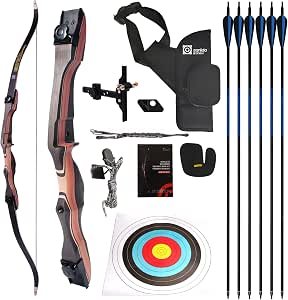
Sanlida Noble Recurve Bow Kit Review 2026 is the beginner kit recurve bow because the **Sanlida Noble Standard** is a complete wooden takedown recurve kit for right-hand youth and adult beginners who want sight, rest, arrows, and target paper in one package.…
The **Sanlida Noble Standard** is a complete wooden takedown recurve kit for right-hand youth and adult beginners who want sight, rest, arrows, and target paper in one package. Buyers often choose it when you value kit completeness and will pick length and poundage to match the shooter today, not five years from now.
A parent who hates three separate Amazon orders gets real value from one coordinated box.
Marketing says "competition" but this is honest target-practice territory at kit price.
The **Sanlida Noble Standard** is a complete wooden takedown recurve kit for right-hand youth and adult beginners who want sight, rest, arrows, and target paper in one package. Buyers often choose it when you value kit completeness and will pick length and poundage to match the shooter today, not five years from now.
The **Sanlida Noble Standard** is a complete wooden takedown recurve kit for right-hand youth and adult beginners who want sight, rest, arrows, and target paper in one package. Buyers often choose it when you value kit completeness and will pick length and poundage to match the shooter today, not five years from now.
Hunting-minded trad
Pick 04
Black Hunter 60″ Takedown Recurve Bow Review is the hunting-minded trad recurve bow because you open the Black Hunter Amazon page and the title stacks takedown, recurve, and longbow into one line. I stop on ASIN B08ZS28L8Z and run a three-point check…
You open the Black Hunter Amazon page and the title stacks takedown, recurve, and longbow into one line. I stop on ASIN B08ZS28L8Z and run a three-point check before checkout.
You open the Black Hunter Amazon page and the title stacks takedown, recurve, and longbow into one line. I stop on ASIN B08ZS28L8Z and run a three-point check before checkout.
You open the Black Hunter Amazon page and the title stacks takedown, recurve, and longbow into one line. I stop on ASIN B08ZS28L8Z and run a three-point check before checkout.
Youth starter
Pick 05
SAS Spirit Jr Review: Youth Takedown Recurve Bow is the youth starter recurve bow because your kid outgrew the toy bow. You want something real, but not a compound package that needs a pro shop before the first arrow flies. That's the moment…
Your kid outgrew the toy bow. You want something real, but not a compound package that needs a pro shop before the first arrow flies. That's the moment this review is for.
A takedown youth bow is easier to live with than a one-piece bow that hogs closet shelf space. Less fuss between sessions usually means more actual shooting.
Myth vs reality: "Beginner bow" does not mean complete package. Plan on accessories from day one. See our bow draw weight guide before you pick limb poundage.
Your kid outgrew the toy bow. You want something real, but not a compound package that needs a pro shop before the first arrow flies. That's the moment this review is for.
Your kid outgrew the toy bow. You want something real, but not a compound package that needs a pro shop before the first arrow flies. That's the moment this review is for.
 ILF path
Pick 06
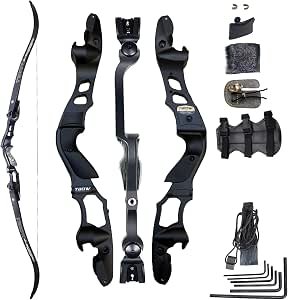
TBOW 62-Inch ILF Recurve Bow Review: Is It Worth It? is the ilf path recurve bow because i’d call this a **buy with caution** for the right archer. If you want a right-hand, competition-style recurve with a real upgrade path, the TBOW makes sense.
I’d call this a **buy with caution** for the right archer. If you want a right-hand, competition-style recurve with a real upgrade path, the TBOW makes sense.
A weekly range shooter will appreciate that kind of flexibility. You can start modest, then step up when your form and strength catch up.
Myth vs reality: higher poundage range always means better performance. In practice, the best setup is the one you can hold cleanly and repeat.
A first-time adult archer often sees “up to 60 lb” and thinks future-proof. That can turn into bad form, sore shoulders, and a bow that sits in the corner.
Myth vs reality: more adjustability means less setup work. It usually means more options, not less responsibility.
I’d call this a **buy with caution** for the right archer. If you want a right-hand, competition-style recurve with a real upgrade path, the TBOW makes sense.
I’d call this a **buy with caution** for the right archer. If you want a right-hand, competition-style recurve with a real upgrade path, the TBOW makes sense.
Buying guide
Who this page is for: beginners and budget buyers choosing a first recurve or traditional path. This is not a prestige brand ranking, and it does not invent field tests or prices.
How to use it: match use case (beginner takedown, kit, youth, hunting-minded trad, or ILF path), confirm draw weight on the listing, then open the matching review.
1) Match use case. 2) Read that review’s buy/skip notes. 3) Confirm draw weight, length, and handedness on the current listing. 4) Still unsure compound vs recurve? See compound vs recurve. Method: how we research.
Common questions
Yes — if it fits you and you can tune it reliably. Most bows in this price range hit legal hunting draw weights. The bigger question is fit, quiet tuning, and whether the package accessories are good enough to get you shooting accurately before season.
Used can save money, but beginners often pay in tuning time and unknown wear. A new budget bow with wide adjustability is usually the safer first buy because you can grow into it and know the string/cable history.
Start lower than you think — often 40–50 lbs for adults learning form. You can increase draw weight as your shot process improves. Adjustability matters more than peak weight for your first compound.
A well-maintained compound bow often lasts 10–20 years. Strings and cables need replacement every 2–3 years of regular use. Budget bows can last just as long as premium models if you keep up with maintenance.
Several picks in this guide advertise no-press maintenance for basic setup. You still need proper tuning knowledge or a shop for major work — but beginner-friendly designs reduce early frustration.
The Samick Sage is a strong value for first-time traditional archers. It gives you an easy entry into takedown recurves, enough room to grow, and a setup that won’t punish you for being new.