Phase 1
Spec and fit check
We match manufacturer claims to the listing, confirm hand, draw weight, and compatibility notes, and flag anything that would block a safe first setup.
Buyer-fit guidance (no numeric score) · how we research
Quick verdict: **Buy it if** you want a budget adult recurve kit, you shoot right-hand, and you can handle the draw weight without muscling the shot. **Skip it if** you want a left-hand bow or a premium package that feels fully dialed in on day one.
✓ Best for
Budget-friendly entry into traditional archery.
✕ Not for
The 30-50 lbs draw weight range can be too much for true…
As an Amazon Associate we may earn from qualifying purchases. Commissions do not change scores. Affiliate disclosure.
The 10-Second Answer
**Buy it if** you want a budget adult recurve kit, you shoot right-hand, and you can handle the draw weight without musc
Buyer fit
Best for: Budget-friendly entry into traditional archery.
Skip if: The 30-50 lbs draw weight range can be too much for true…
No numeric research score — inputs are not documented for this review. How we research
Editor's Verdict
I see this as a practical value pick for someone who wants one bow for backyard practice and light field use later. A 38-year-old hunter who can draw 30 pounds smoothly, but doesn’t want to spend custom-bow money yet, lands in the sweet spot here.
The big catch is the 30-50 lbs draw weight range. That range sounds flexible, but the upper end is too much for a lot of newer archers, and the included 6 pcs arrows help with startup, not with perfect tuning.
For readers comparing options, this sits between lower-draw beginner kits and pricier takedown models with better accessory support. If you want a broader recurve starting point, see our recurve bow hub and beginner recurve guide. If you’re still sorting out draw weight, our bow draw weight guide is the right next stop.
Myth vs reality: A bow labeled for hunting isn’t automatically a good first hunting bow. The draw weight and your form decide that.
Want the quick specs before you decide?
— ambermitchellI’d call this a decent entry-level traditional bow if you already know you want a recurve and you shoot right-handed. I wouldn’t hand it to a total beginner at 50 pounds and call it easy.
Overview
The 60 inch takedown recurve bow format makes sense for adults who want a simple traditional archery setup without a lot of moving parts. It’s easier to store than a one-piece bow, and it keeps the learning curve cleaner than a compound bow with cams and extra tuning points.
If you’re comparing recurve simplicity against compound complexity, this is the cleaner path. A compound can be easier to aim, but a recurve teaches form faster, and that matters if you want a bow that feels direct in the hand.
This is best for adults who already understand basic setup needs and can judge draw weight honestly. If you’re shopping for a hunting recurve bow for beginners, I’d still keep the weight conservative until your form is solid.
A buyer who wants one bow for spring backyard practice and later light hunting needs to think in stages. The bow can fit that plan, but only if the accessories and arrow choice get sorted early.
I’d confirm handedness first, because the right hand bow setup is non-negotiable here. Then I’d check whether the included arrows match your draw and whether you already own a finger tab and arm guard.
The title’s “practice competition” and “longbow kit” language can make the package sound broader than it is. I’d treat it as an adult practice recurve kit first, then a possible entry into light hunting if the draw weight fits and the rest of the setup is right.
If you want a more complete setup path, our beginner bow setups and hunting bow setups pages are useful next reads. For a broader comparison, our compound vs recurve guide helps if you’re still torn.
Myth vs reality: If arrows come in the box, they’re automatically the right arrows for the bow. They usually aren’t, at least not without checking spine and length.
Specs, Visualized
Summary: length: Draw Weight. 60 inches: 30-50 lbs
Our pick for most adults: 30–50 lbs. Take the 15-second draw weight test →
Strung length
Draw Weight
Fail any of these? Use the bow finder below →
How We Research
Summary: We verify listing specs, check owner feedback across Amazon and forums, and compare against bows and accessories we have already reviewed on Bow Advice.
Phase 1
We match manufacturer claims to the listing, confirm hand, draw weight, and compatibility notes, and flag anything that would block a safe first setup.
Phase 2
We read recent Amazon reviews and archery forum threads for repeat praise, repeat complaints, and gaps between marketing copy and real-world use.
Phase 3
We compare price, included accessories, and upgrade path against close competitors so the recommendation reflects value—not just brand loyalty.
Owner Consensus
Summary: The common praise pattern is simple, people like the price, the takedown design, and the fact that arrows are included. The complaints usually circle back to setup extras and arrow…
The common praise pattern is simple, people like the price, the takedown design, and the fact that arrows are included. The complaints usually circle back to setup extras and arrow matching.
Common praise
Common complaints
The usual forum take is pretty consistent, too. Shooters like the value, but they warn new buyers not to treat the upper draw weights like a starter setting.
Myth vs reality: A takedown bow is only about convenience, not performance. Reality is, the format helps with transport and storage, and it can still shoot well if the setup fits you.
Once you know what’s included, the next question is whether the bow actually fits your use case.
I’d call this a decent entry-level traditional bow if you already know you want a recurve and you shoot right-handed. I wouldn’t hand it to a total beginner at 50 pounds and call it easy.
Best for
Budget-friendly entry into traditional archery.
Not for
The 30-50 lbs draw weight range can be too much for true…
Check price on Amazon →Bow Finder
Pick the profile that sounds like you. We point you to a living guide — not a scored ranking of this product.
Use-case path
Look for adjustable draw weight, a shelf or rest option, and a budget that still leaves room for arrows and a target. Begin with compound vs recurve, then a starter guide.
Next read
Starter guides — not a fit scoreUse-case path
Traditional shooters often want a smooth draw and simple setup. Takedown models let you swap limbs as you progress.
Next read
Traditional guides — not a fit scoreUse-case path
Hunters usually want let-off, sights, and adjustability. Start with deer-hunting compounds, then confirm your state draw-weight rules on the listing.
Next read
Hunting guides — not a fit scoreUse-case path
Youth bows should be light enough for small frames and adjustable enough to grow into. Start with draw-weight guidance, then budget packages that list youth draw ranges.
Next read
Youth path — not a fit scoreUse-case path
Competition paths vary by league. Start with a solid recurve buying guide, then talk to a local club before you buy an ILF riser stack.
Next read
Target path — not a fit scoreUse-case path
Budget does not mean bad. Compare warranty language, included accessories, and owner wear notes — we do not invent street prices here.
Next read
Budget guides — not a fit scoreBuyer Questions
The questions real buyers ask before ordering, answered from listings, manuals, and owner-feedback patterns — not a private lab.
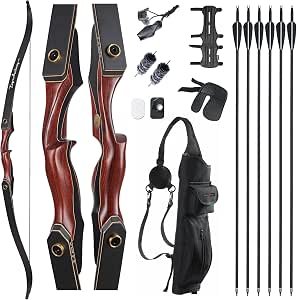
Check price on Amazon →It’s a TOPARCHERY takedown recurve bow package for adults, built around a 60-inch bow and a right-hand setup. The set includes 6 pcs arrows, so you’ve got a basic starting point for practice.
It’s a recurve bow. The product title uses longbow kit wording, but the bow itself is a takedown recurve bow with recurve limbs.
It’s best for right-handed adults who want an affordable traditional bow for practice, casual target shooting, or light hunting use. It’s a better fit for someone who already understands basic setup needs than for a total first-timer.
That’s the draw weight range. It tells you how much force it takes to pull the string, and the higher end can be too much for beginners who haven’t built form yet.
It’s enough to get started, but I’d still check arrow length and spine before you shoot a lot. Included arrows are handy, but they’re not always perfectly matched to the bow.
Most buyers should plan on a finger tab, arm guard, and a stringer. Depending on your setup, you may also want better arrows and a few basic tuning accessories.
I’d recommend this as a budget adult practice recurve kit for right-handed buyers who want a simple traditional bow and don’t mind adding a few accessories. I wouldn’t call it a polished hunting rig out of the box.
If you want a low-cost traditional bow for range days, this is a fair value. If you want a first hunting bow, it can work, but only if you keep the draw weight sensible and finish the setup properly.
For buyers who want a better-supported package, higher-end takedown recurve bows still make more sense. For everyone else, this sits in that useful middle lane between cheap starter gear and pricier premium options.
If you want a quick answer, the FAQ below covers the most common buyer questions.